

Bringing home a new baby is an exciting experience, but when your baby arrives a few weeks earlier than expected, it is natural to have questions about their growth and development. Many parents of late preterm babies wonder whether their child will reach developmental milestones on time or if they should be concerned about delays.
The reassuring news is that most late preterm babies grow and develop well, although they may reach certain milestones slightly later than babies born at full term. Understanding what is normal—and knowing when to seek professional advice—can help you support your baby’s healthy development with confidence.
In this guide, you’ll learn:
What a late preterm baby is
How late preterm baby development differs from full-term babies
Why corrected age is important
Common developmental milestones
Signs that may require evaluation
How pediatric physiotherapy can support healthy motor development
What Is a Late Preterm Baby?
A late preterm baby is a baby born between 34 weeks and 36 weeks and 6 days of pregnancy, before completing the full 37 weeks of gestation.
Although these babies often look similar to full-term newborns, their brains, muscles, lungs, and nervous systems are still completing important stages of development during the final weeks of pregnancy. Because of this, late preterm infants may need additional monitoring during their first months of life.
Compared with full-term babies, late preterm infants may have a slightly higher risk of:
Mild developmental delays
Feeding difficulties
Lower muscle tone (hypotonia)
Jaundice
Temperature regulation problems
Breathing difficulties during the newborn period
However, it is important to remember that being born late preterm does not mean your baby will have long-term developmental problems. Many children catch up with their peers during infancy and early childhood, especially with regular developmental monitoring and early intervention when needed.
Do Late Preterm Babies Develop Normally?
Yes. Most late preterm babies develop normally, but they may reach some developmental milestones slightly later than full-term infants.
Rather than comparing your baby with other children of the same chronological age, healthcare professionals evaluate development using corrected age, which provides a more accurate picture of your baby’s progress during the first two years of life.
For many families, understanding corrected age immediately reduces unnecessary anxiety and helps setrealistic expectations for developmental milestones
Understanding Corrected Age
One of the most important concepts for parents of premature babies is corrected age, sometimes called adjusted age.
Corrected age accounts for the number of weeks your baby was born early.
Example
If your baby:
- Was born at 35 weeks
- Is now 5 months old
Your baby’s corrected age is approximately 4 months, because they were born about one month before their due date.
Pediatricians use corrected age when evaluating developmental milestones because it reflects your baby’s actual developmental maturity rather than simply counting the weeks since birth.
Most specialists continue using corrected age until 24 months, although some developmental assessments may extend beyond this period for babies born significantly premature.
Why Do Late Preterm Babies Reach Milestones Later?
The final weeks of pregnancy are an important period of rapid brain and nervous system development.
During this time, babies continue developing:
Brain connections responsible for movement and coordination
Muscle strength
Head and neck control
Balance and posture
Feeding coordination
Sensory processing
Because late preterm babies spend part of this developmental period outside the womb, they may need additional time to build the strength and coordination required for motor milestones such as rolling, sitting, crawling, and walking.
In most cases, these differences become less noticeable as children grow, particularly when parents provide plenty of opportunities for movement, play, tummy time, and age-appropriate stimulation.
Late Preterm Baby Development Milestones
Every baby develops at their own pace. While late preterm babies may achieve some milestones a little later than full-term infants, pediatricians evaluate their progress using corrected age, not chronological age.
The table below provides a general guide for common motor milestones. Remember that small variations are normal, and your baby’s healthcare provider will consider their overall development rather than a single milestone.
| Developmental Milestone | Typical Age (Using Corrected Age) |
|---|---|
| Holds head steady | Around 3–4 months |
| Rolls over | Around 4–6 months |
| Sits without support | Around 6–8 months |
| Crawls | Around 8–10 months |
| Pulls to stand | Around 9–12 months |
| Walks independently | Around 12–18 months |
Every child is unique. Some babies reach these milestones earlier, while others take a little longer and still develop normally.
Are Late Preterm Babies Developmentally Delayed?
Not necessarily.
Many late preterm babies simply follow a slightly different developmental timeline rather than having a true developmental delay.
Because they were born before completing the final weeks of pregnancy, their muscles, brain, and nervous system may need extra time to mature. As a result, milestones such as rolling over, sitting, crawling, or walking may occur a few weeks or even months later than in full-term babies when compared using chronological age.
This is exactly why pediatricians use corrected age during developmental assessments.
In many cases, late preterm babies gradually catch up during the first two years of life without experiencing long-term developmental problems.
Common Developmental Challenges in Late Preterm Babies
Although most late preterm babies develop well, some may benefit from closer monitoring during infancy.
Below are some of the most common developmental differences healthcare professionals may observe.
How Parents Can Support Healthy Development
Parents play an important role in helping their late preterm baby build strength, coordination, and confidence.
Simple everyday activities can make a meaningful difference.
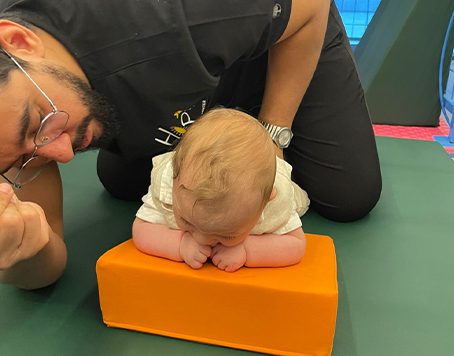
Prioritize Tummy Time
Tummy time is one of the most effective ways to strengthen your baby’s:
- Neck muscles
- Shoulder muscles
- Upper back
- Core stability
Start with just a few minutes several times each day while your baby is awake and supervised.
As your baby becomes stronger, gradually increase the duration.
Using toys, mirrors, songs, and face-to-face interaction makes tummy time more enjoyable and encourages movement.
Encourage Floor Play
Babies learn movement through exploration.
Whenever possible, allow your baby to spend supervised time on a soft play mat where they can:
- Reach for toys
- Roll
- Pivot
- Push up
- Practice crawling
Free movement provides more developmental benefits than prolonged time in equipment.
Limit Time in Baby Equipment
Although swings, bouncers, and infant seats are convenient, spending too much time in them may reduce opportunities for active movement.
Instead, encourage safe floor play throughout the day so your baby can naturally develop balance, strength, and coordination.
Give Your Baby the Best Start
Concerned about your baby’s motor development or developmental milestones?
Our pediatric physiotherapists provide comprehensive developmental assessments for late preterm babies and personalized treatment plans when needed.
✓ Early developmental assessment
✓ Evidence-based evaluation
✓ Personalized care plan
✓ Family-centered support
Monitor Progress Without Comparing
Every baby develops differently.
Rather than comparing your child with friends’ babies or online milestone charts, follow your pediatrician’s guidance and always consider corrected age.
Small differences in timing are often completely normal.
When Should Parents Be Concerned?
Although many late preterm babies reach milestones slightly later than full-term infants, some signs may indicate the need for further evaluation.
You should speak with your pediatrician or a pediatric physiotherapist if your baby:
Has difficulty holding their head up after the expected corrected age.
Shows very little movement or seems unusually stiff or floppy.
Consistently uses only one side of the body.
Has trouble turning their head in both directions.
Misses several developmental milestones rather than just one.
Loses skills they had previously developed.
Remember, every baby develops differently. An early assessment does not necessarily mean something is wrong—it simply helps identify whether your baby would benefit from additional support.
Early Assessment Can Make a Difference
If your pediatrician recommends further evaluation, specialized developmental assessments can provide a clearer picture of your baby’s motor skills and overall progress. For example, the General Movements Assessment (GMA) is a non-invasive assessment used during early infancy to evaluate spontaneous movement patterns and identify babies who may benefit from closer monitoring or early intervention.
Early assessment does not necessarily mean that a child has a developmental disorder. Instead, it helps healthcare professionals determine whether additional support or pediatric physiotherapy would be beneficial during this important stage of development.
When Is Pediatric Physiotherapy Recommended?
Pediatric physiotherapy focuses on helping babies develop strength, balance, coordination, and movement skills appropriate for their age.
A pediatric physiotherapist may recommend treatment if your baby has:
Delayed motor milestones
Low muscle tone (hypotonia)
Torticollis
Poor head control
Difficulty rolling, sitting, or crawling
Movement asymmetry
Early intervention can help improve movement patterns, support healthy motor development, and give parents practical strategies to continue therapy at home.
Frequently Asked Questions:
Do late preterm babies catch up with full-term babies?
Yes. Most late preterm babies gradually catch up during the first two years of life, especially when development is assessed using corrected age and they receive appropriate support when needed.
What is the difference between chronological age and corrected age?
Chronological age is your baby’s age from birth. Corrected age adjusts for the number of weeks your baby was born early and provides a more accurate way to assess developmental milestones during infancy.
When should a late preterm baby hold their head up?
Most late preterm babies develop good head control around 3 to 4 months of corrected age, although there can be normal variation between children.
Do all late preterm babies need physiotherapy?
No. Many babies develop normally without treatment. Physiotherapy is recommended only when a healthcare professional identifies delays, muscle weakness, or movement difficulties.
Can tummy time help late preterm babies?
Yes. Supervised tummy time helps strengthen the neck, shoulders, back, and core muscles that support rolling, sitting, and other developmental milestones.
Supporting Your Baby Every Step of the Way
Watching your baby grow is an exciting journey, and it’s important to remember that every child develops at their own pace. While late preterm babies may reach some milestones a little later than full-term infants, most continue to make steady progress with time, encouragement, and regular developmental monitoring.
Understanding corrected age, encouraging daily movement through tummy time and floor play, and seeking professional advice when concerns arise can help your baby build a strong foundation for healthy growth.
At Hope Medical Center Riyadh Saudi Arabia, our experienced pediatric physiotherapy team works closely with families to assess development, address movement concerns, and create personalized treatment plans that support every child’s unique needs. Whether your baby needs reassurance, monitoring, or early intervention, we’re here to help you navigate each developmental milestone with confidence.
Hope Medical Center – A Place of Healing and Growth for Late Preterm Infants
We at Hope Medical Center in Riyadh understand that raising a late preterm infant presents both unusual difficulties and amazing opportunities for their overall development journey. This is why we have one of the best pediatric physiotherapy teams in Riyadh, who are committed to walking with you from the very beginning.
Whether your child needs help with milestone development, raising muscle tone, or managing conditions like torticollis, our experienced therapists collaborate closely with parents and caregivers to create individualized treatment plans catered to their particular needs. We believe early guidance and gentle intervention can make a lasting difference. So, schedule an appointment with our expert therapists today and see how we help your late preterm baby build a strong start in life!
