In This Article
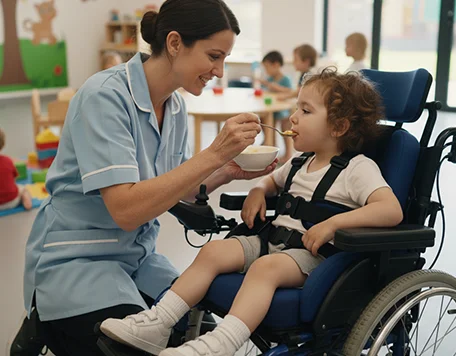
Cerebral palsy can create challenges for children and their families, particularly around eating and getting enough nutrition. Parents may notice difficulty chewing, swallowing, or accepting different foods. These difficulties can affect growth and make meals stressful for the child and family.
Appropriate nutrition is important for health and quality of life. Families seeking cerebral palsy care in Riyadh can access specialist feeding support for swallowing difficulties, poor appetite, and other feeding challenges.
Understanding swallowing difficulties
Children with cerebral palsy may experience feeding difficulties because of reduced oral motor skills or muscle coordination. Signs can include choking during meals, vomiting, food refusal, or taking a long time to eat. Swallowing difficulties can also make it harder to obtain the nutrients needed for growth.
Specialists assess how a child chews, swallows, and responds to textures and flavors to understand the reasons for these difficulties. Targeted intervention aims to improve coordination and confidence around eating. This makes early attention to feeding and swallowing an important part of cerebral palsy care.
What is specialist pediatric feeding therapy?
Feeding therapy addresses concerns such as food aversion, oral motor difficulties, and swallowing problems. It uses structured interventions to support a child's interaction with food and mealtime routines.
Depending on the assessment, therapists may use sensory approaches, muscle exercises, and behavioral strategies. The aim is adequate nutrition alongside a positive relationship with food.
The benefits extend beyond physical health. More comfortable eating can support independence and confidence. Families may therefore include feeding care within a broader cerebral palsy rehabilitation plan.
How targeted support helps
A feeding program considers several related skills rather than a single symptom:
- Oral muscle skills support chewing and tongue movement.
- Sensory processing work helps a child explore different food textures.
- Swallowing coordination work aims to reduce difficulties during meals.
- Feeding routines support positive, organized mealtimes.
- Nutrition and hydration support growth and general health.
Together, these areas help children develop the skills needed to eat a wider range of foods safely.
Benefits of early attention to swallowing
Addressing feeding difficulties early can support growth and reduce the risk of problems such as poor nutrition or dehydration. Therapy works on oral skills, chewing, and swallowing. Over time, a child may become more comfortable trying different foods and develop a more varied diet.
Improved sucking and tongue movement can also support greater independence. Building a healthier relationship with food can make meals more comfortable for children and caregivers.
Feeding care at Hope Medical Center
At Hope Medical Center, experienced speech-language therapists provide individualized support for feeding and swallowing. They consider oral muscle skills, chewing, and safe swallowing.
Assessment includes respiratory safety, nutrition, hydration, sensory responses, and overall development. Therapists then create a plan to support safe feeding and growth.
For families seeking cerebral palsy care in Riyadh, our child-centered setting combines targeted feeding intervention with practical guidance. An assessment is the first step toward understanding how to support your child's nutrition, confidence, and quality of life.
Frequently asked questions
Why can cerebral palsy affect swallowing?
Weakness or reduced coordination of the oral muscles can make chewing and swallowing more difficult.
Can feeding therapy improve eating habits?
Specialist therapy can support oral skills and coordination and help a child become more comfortable with different foods.
When should parents seek help?
Seek medical guidance if a child repeatedly chokes, refuses food, or struggles during meals.
Concerned about your child’s development?
Book an assessment and take the first step towards the right care for your child.